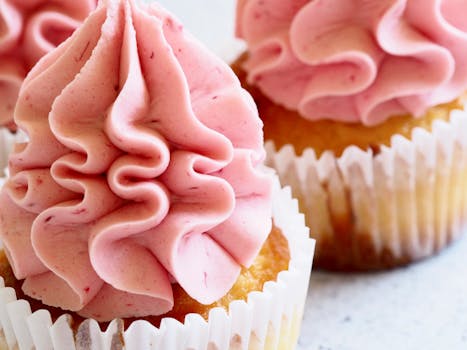
Buttercream's Enigmatic Structure: A Pastry Chef's Scientific Deconstruction
Temperature's subtle tyranny dictates buttercream's destiny. Too tepid, and our emulsion succumbs to a soupy demise; too frigid, and emulsification becomes a Sisyphean task. The Goldilocks zone—a balmy 65-70°F (18-21°C)—fosters a stiff yet ethereal frosting, though even minor ambient fluctuations demand meticulous attention. This thermal equilibrium is the cornerstone of our creamy confection, influencing every stage, from the initial butter manipulation to the final, glorious swirl.
Sugar's crystalline architecture, far from mere sweetness, forms the structural bedrock of our buttercream. These microscopic building blocks, carefully integrated within the butter matrix, create a robust framework, a veritable scaffolding, upholding the airy pockets and preventing the dreaded oily separation. Granular variations play a crucial role: fine sugars blend seamlessly, creating a luxurious smoothness; coarser crystals, however, may yield a less refined texture, a textural compromise we must carefully consider. Understanding the science behind sugar's role is crucial for perfect results.
Butter, the unassuming hero, presents itself as an emulsion—a dance between water and fat. Whipping introduces air, forming a delicate balance, akin to crafting a soufflé; too much aeration, and it collapses into a grainy ruin; too little, and a dense, unyielding mass results. Mastering this airy choreography is paramount to creating a buttercream of exquisite lightness and stability.
A symphony of flavor awaits the adventurous baker. Infusing butter beforehand with aromatic essences, wielding premium extracts judiciously, and even adding a whisper of complementary salt elevates our buttercream beyond a mere sweetening agent. Each element contributes to the harmonious whole—a culinary orchestra where each instrument’s timbre and volume carefully compose a magnificent taste experience. Consider the cake's profile; the buttercream should harmonize, not clash, creating a balanced, unforgettable gustatory journey.
Beyond the fundamental trio of butter, sugar, and flavor, advanced techniques call for the deployment of stabilizers (such as meringue powder or glucose) and emulsifiers (like lecithin). These culinary fortifications, bolstering our already established sugar scaffolding, further enhance stability and texture, safeguarding against temperature fluctuations and preventing that most dreaded of buttercream betrayals: oil separation. Their addition transforms our structure, much as reinforced beams would enhance a building's resilience to seismic stresses.
The whipping process demands precision, finesse. Beginning gently at low speeds, we gradually accelerate, coaxing the mixture into a light and airy texture. A stand mixer, its tireless whirring a boon to the baker, is strongly recommended for this delicate task. Careful observation is essential—a watchful eye tracking the subtle changes in consistency, pursuing that perfect balance of peaks and velvety smoothness.
The Transformative Power of Scientific Baking
This scientific understanding elevates buttercream artistry beyond simple recipe adherence. It empowers us to solve problems swiftly and adapt our creations to any circumstance, transforming the process into a truly bespoke culinary expedition.
Troubleshooting becomes child's play. A coarse texture hints at over-whipping or coarse sugar; an oily separation suggests temperature inconsistencies or the use of excessively warm butter. Armed with this knowledge, we can swiftly diagnose and correct, producing perfect results with admirable efficiency. Understanding how to minimize variables, like accurately controlling temperature, is a key skill; much like understanding how to minimize your AMT.
Customization becomes a reality. Need a frosting impervious to summer's heat? Incorporate stabilizers. Yearning for a cloud-like confection? Refine whipping techniques and alter the air-to-ingredient ratio. This mastery of principles allows bespoke tailoring to diverse situations and climatic conditions—a sophisticated approach akin to a chef’s precise adjustment of a delicate sauce.
The ultimate reward? Unbridled creative license. Experiment fearlessly with exotic sugars, unusual flavor combinations, and intricate layerings of taste, creating masterpieces previously confined to culinary dreams. The possibilities become limitless, transforming buttercream from an ingredient to an artist's palette, a blank canvas awaiting strokes of genius.
Embrace this scientific methodology, and you'll transcend the mere creation of frosting, ascending to true culinary artistry. The rewards? Unrivaled quality, boundless creative expression, and an unwavering confidence in your baking prowess. Each whipped element, perfectly balanced, contributes to a masterpiece, a testament to the harmony between science and culinary passion.